
It’s All Practice
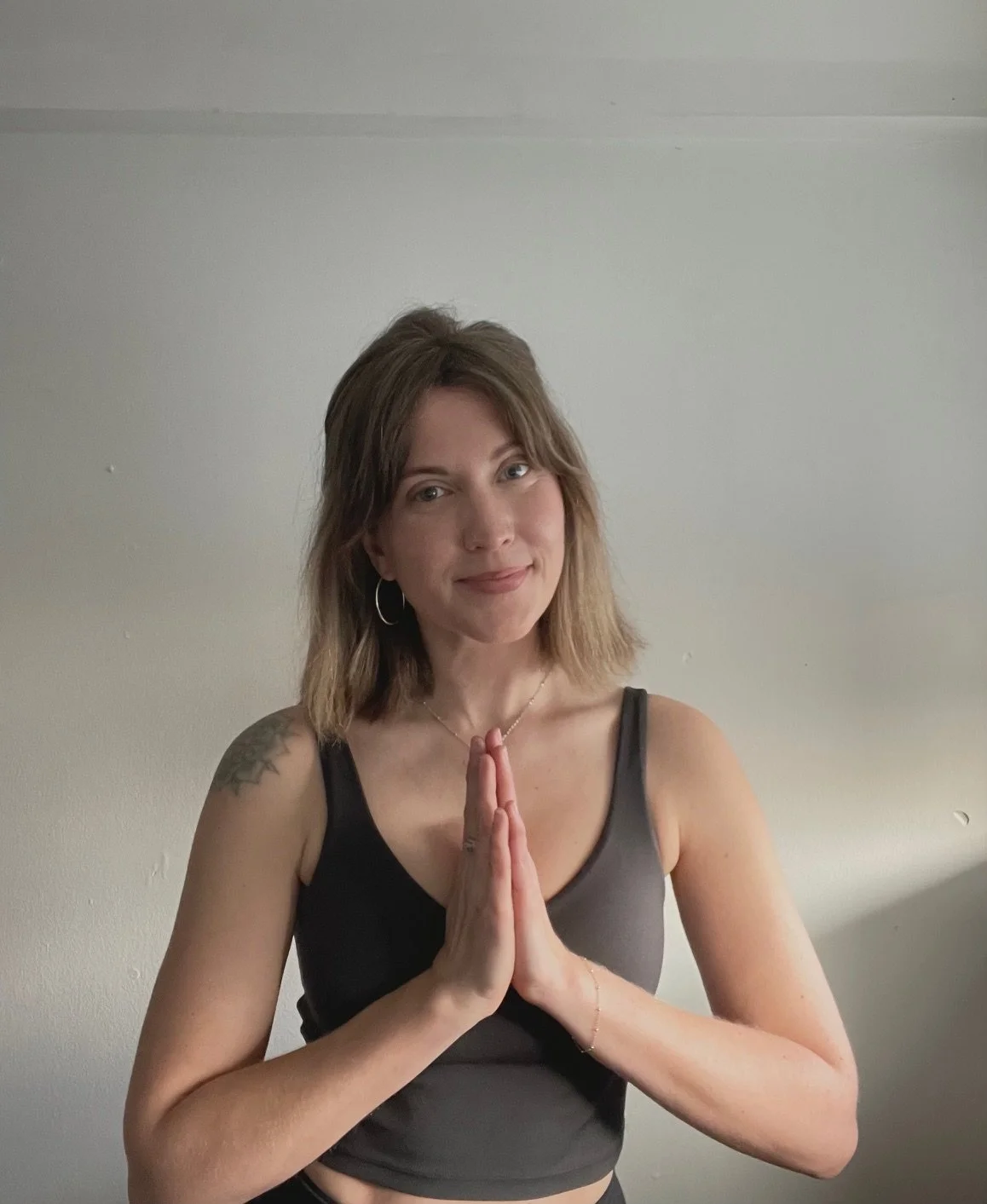
In this blog, Carly reflects on the beauty of restorative yoga, how our practice shifts with stages of our lives and what led her to exploring yoga even deeper through Yoga Teacher Training.
“As you start to walk the way, the way appears” Rumi
Years ago, on Sunday evening, I walked into a darkened yoga studio to take a class that would alter me permanently. I arrived, like so many first-time restorative students, unprepared for what the class had to offer. Was this… napping? But as the teacher walked us through various resting positions using a nest of props, the atmosphere inside me shifted. I was no longer in a basement off Trinity Lane, in a room full of people. And I wasn’t asleep. My awareness was resting somewhere deeper in my body than I’d consciously been before. It wasn’t a magic pill, but the practice was an unmistakable portal that kept me coming back.
There are countless reasons to attend a yoga class. A solid workout, a sense of community, a chance to stretch. The aspirational image of a new-and-improved body—the way it looks or moves—might draw someone toward the mat. That’s been my motivating factor more times than I’d like to admit. My take, though? They’re all good reasons. Over time, with teachers who respect the tradition of yoga, the practice does its work regardless of our original intentions.
Restorative classes changed my conception of yoga’s function, though I’d been practicing in some form for a decade. I’d loved stretching myself, quite literally, to the edge of my ability. Using the studio mirrors as a guide, I tried to emulate the student most confident in their movements. Occasionally, I relished seeing myself in the mirror, contorting my body into a beautiful shape—into the right shape. As if yoga were something I could win.
A restorative class was different. There was nothing to perform, nothing to get right beyond my own sense of presence. This was a new mental pattern. I continued taking the other classes I loved, hot 26 and vinyasa, but my organizing principles began to shift over time. I started treating my body with the same kindness my teacher extended toward me. I allowed myself, if only for 60 minutes, a break from the hamster wheel of self-improvement.
The studio I’d been attending closed when the COVID pandemic hit, but I kept taking class online. By the time I was able to venture back into the world, I was desperate for a community that would make space to explore the many existential questions that arose for me during lockdown. I’d leaned on my physical practice to stay somewhat sane in isolation, but I didn’t know where to start when it came to yoga philosophy. I was intimidated by the vastness of the tradition. Lucky for me, Hola Yoga was the first studio I tried.
Oddly, restorative classes didn’t seem to have the same effect they did a year earlier, even with skilled teachers and new props (shout-out to the sand mat).Unable to replicate the experience I’d had before, I went exploring through the class schedule. Something glimmered in me when Erika Porter wove concepts like the Yamas and Niyamas into her vinyasa class. Saturday mornings with Celeste Greene introduced me to Nadi Shodhana and other pranayama practices. The concepts sprinkled into our asana classes began to explain how the gentler practices had such powerful effects, and they imbued demanding physical practice with a new depth. It seemed that as I changed, the practices that worked best for me changed, too.
When Hola announced its first teacher training, I didn’t immediately apply. I felt young in my yoga practice and far too green to take on the responsibility of leading a class. I imagined the ideal teacher. She would be perpetually fresh-face, wise, her voice always soft and her linen never wrinkled. She would have transcended her earthly problems before ever designing a class. The old mental patterns that demanded an A+ performance in my early asana practice were back at the wheel.
I’m so glad I applied anyway. Showing up imperfectly was made easier for me only by committing to being imperfect in community with and in front of other students. In this way, we work toward our collective liberation.
Teacher training at Hola, and the two years I’ve spent studying with Celeste since, provided me with something meaningful to offer as a teacher, and I’m deeply grateful for the opportunity to guide students toward a deeper, more compassionate experience of themselves and the world. But, more than that, I’m grateful for the introduction to the tradition of yoga beyond asana, which frames all of life—my relationships, my thought patterns, my daily habits—as a place to practice. It’s a gift to be a life-long student, on and off the mat. And how lucky to be in community with other students and teachers, supporting each other as our paths appear.